How to Follow Up Unaccepted Dental Treatment Plans
Most plans that do not go ahead were never turned down. Following up is finishing a conversation the practice started, with an owner, a date and a rhythm.
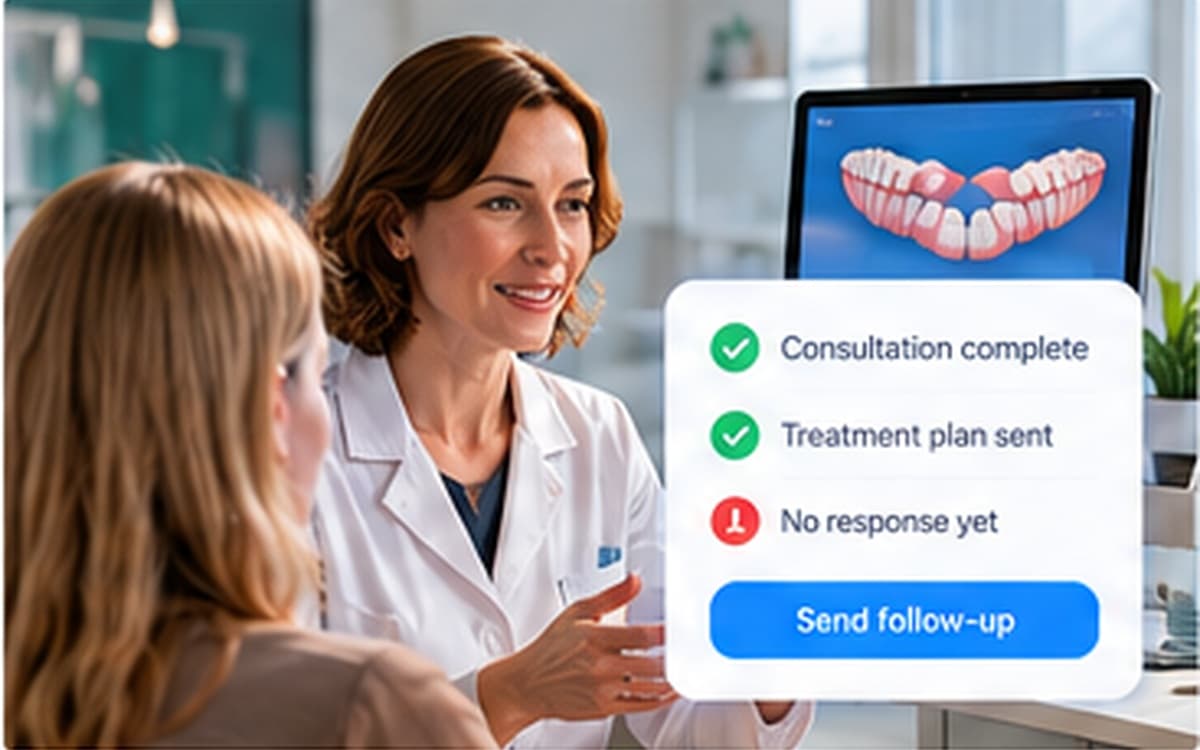
Most plans that do not go ahead were never turned down. Following up is finishing a conversation the practice started, with an owner, a date and a rhythm.
Unaccepted is not the same as declined
Most treatment plans that do not go ahead were never turned down. The patient said they would think about it, the practice said it would be in touch, and nothing happened next. The plan is unaccepted, not declined, and that is a very different place to be.
Following up an unaccepted plan is not selling. It is finishing a conversation the practice started, and patients who were genuinely interested usually expect it.
Give every plan an owner and a date
The single biggest change a practice can make is to stop treating follow-up as something that happens “when there is time”. Every proposed plan should leave the surgery with a named owner, usually the treatment coordinator, and the date of the next contact.
Without a date, a plan has no way to become overdue, so it never reaches the top of anybody's list.
A follow-up rhythm that does not feel like chasing
A rhythm that works for most private treatment looks like this, adjusted to the size of the decision.
- Same day: a short message with the plan, the price and one way to ask a question.
- Day 3 to 5: a check-in that answers the most common question for that treatment, such as finance, time off work or what happens at the first visit.
- Day 8 to 10: a personal call or message from the treatment coordinator, offering to talk it through.
- Day 21 to 30: a final note that leaves the door open and tells the patient how to pick it up again.
- Stop the moment the patient replies. A reply turns follow-up into a conversation that a person should own.
- Use the channel the patient used. A patient who came in on WhatsApp will not read a letter.
- Count silence from when the practice last asked, not from the consultation.
What to say, and what to avoid
Good follow-up answers a question the patient has not yet asked. Patients considering implants often worry about time off work; patients considering aligners often worry about cost and finance; patients considering whitening often want to know whether it will hurt.
Avoid discounts as a follow-up tactic, avoid pressure about availability unless it is true, and never put clinical advice in an automated message. Anything about suitability belongs in a conversation with the dentist.
Three common follow-up mistakes
Most practices that try to improve plan follow-up make one of three mistakes, and each one undoes the effort.
- Following up by the wrong channel. A letter or an email to a patient who has only ever replied on WhatsApp is follow-up in name only.
- Following up without a reason. “Just checking in” gives the patient nothing to respond to. A message that answers a likely question, or offers a time to talk, does.
- Following up forever. A patient who has not replied to four contacts over a month has given you an answer. Mark the plan as closed for now, record why if you know, and stop.
A note for practices with several clinicians
Where more than one dentist proposes treatment, give follow-up one owner rather than leaving each clinician to chase their own plans. Clinicians are rarely free at the moment a patient replies, and patients should not have to wait for a gap between appointments to get an answer about finance.
Measure the follow-up, not the outcome
Acceptance depends on many things a follow-up process cannot control. What a practice can control is whether every plan got its follow-up on time. Track how many plans have an owner, how many are overdue and how many were followed up within their date.
Clinqly keeps each proposed plan with its stage, owner and next date, counts silence from the last time the practice asked, can send routine follow-up on the patient's own channel where the practice switches it on, and shows the treatment coordinator which plans need them today.