How to Reactivate Lapsed Dental Patients
The recall text is the easy part. Patients come back, or do not, in what happens after it lands: the reply, the question, the booking.
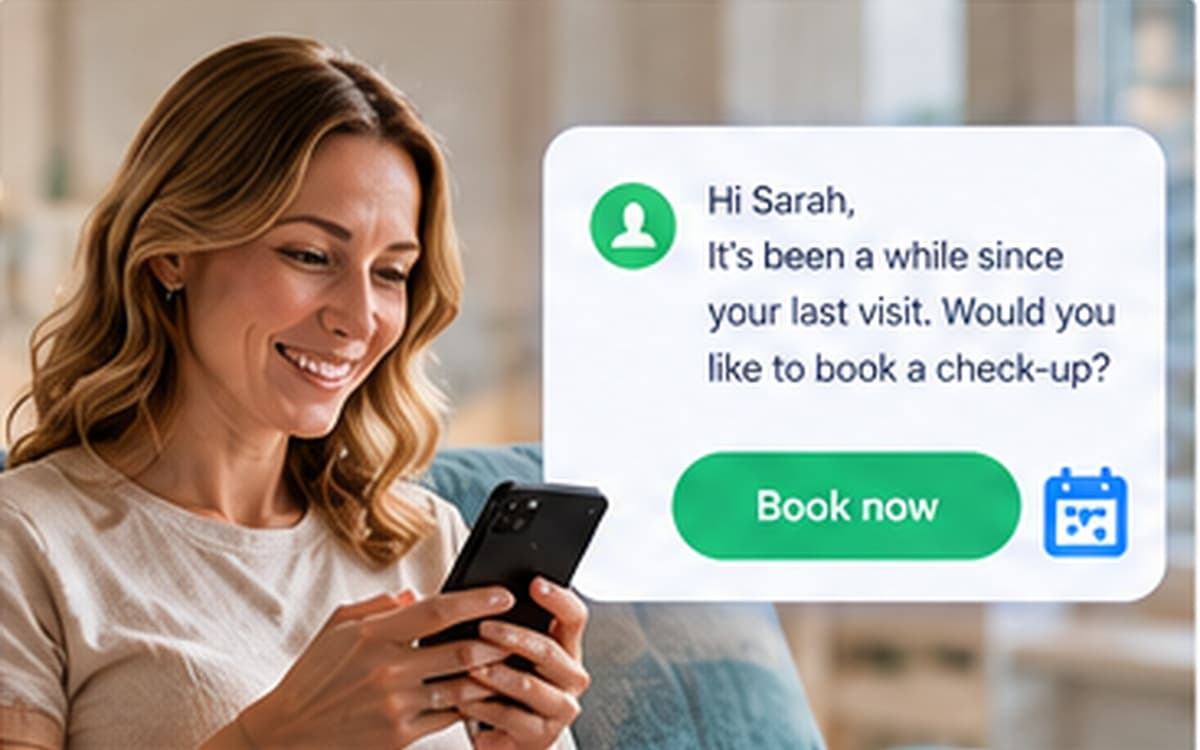
The recall text is the easy part. Patients come back, or do not, in what happens after it lands: the reply, the question, the booking.
Due, overdue and lapsed are three different conversations
Practices often treat every patient who has not been in recently as one list. They are not. A patient due next month needs a reminder. A patient a few months overdue needs a nudge and an easy way to book. A patient who has not been in for two years may have moved, changed practice or be anxious about coming back, and needs a warmer, more personal message.
Sending all three the same recall text works for the first group and quietly fails the other two.
Recall intervals are clinical decisions
NICE guidance on dental recall says the interval between oral health reviews should be set for each patient by the dentist, based on their oral health and risk, within a range rather than a fixed six months. Software can remind patients when a date set by the practice comes round. It should never decide when somebody is due.
Where reactivation is won or lost
The recall letter or text is the easy part, and most practice-management systems send it. Patients come back, or do not, in what happens next: the reply asking for a Saturday, the question about whether they need a new patient exam, the patient who wants to book but will not ring during working hours.
- Make replies easy, on the channel the patient prefers.
- Answer the common questions straight away: hours, prices, whether the patient is still registered.
- Offer real times rather than asking the patient to phone.
- Stop after a small number of attempts, and hand the silent ones to a person to call.
A reactivation rhythm
- Check the list: remove anyone already booked, anyone who has asked not to be contacted and anyone recently messaged.
- Send a short, personal reminder that says who set the date, such as “Dr Shah has you down as due a check-up”.
- Answer replies quickly and offer times in the same conversation.
- After three unanswered attempts, stop messaging and add the patient to a call list.
- For long-lapsed patients, a call or a personal note often works better than another text.
What to say to a patient who has not been in for a long time
A long-lapsed patient may feel embarrassed about the gap, worried about what the dentist will find or unsure whether they are still registered. The message should remove each of those barriers rather than add urgency.
Say who you are and why you are writing, make clear they are welcome back, answer the question about whether they need a new patient appointment, and give one easy way to reply. Avoid anything that sounds like a warning about their oral health; that conversation belongs with the dentist.
Measuring reactivation honestly
Count what you can observe: how many due patients were contacted, how many replied and how many booked an appointment. Be careful about attributing every booking to the reminder; some patients would have booked anyway. The useful question is whether due patients are being contacted consistently, and whether replies are answered quickly.
Where Clinqly fits
Clinqly acts only on due dates the practice entered or imported; it never works out when somebody is due. When a date comes round, the patient appears with a prepared reminder. A person sends it, and Clinqly checks consent, existing bookings, recent replies and previous attempts first. Replies on WhatsApp, Instagram, Messenger or website chat are answered and booked, and after three unanswered reminders the patient is shown as a call to make.